Hi, I'm Ayhan, a committed student of Applied Computer Science with a major in Cyber Security. Outside of my studies, I develop a SaaS platform, where I focus on real world problem solving, product design, and backend architecture.
Hi, I'm Ayhan. I graduated cum laude from Howest in Applied Computer Science, on the Cyber Security Professional track. Through my internship and SaaS projects, I’ve gained practical experience in testing applications, investigating issues, and documenting findings. I enjoy understanding how systems work and helping improve their security and reliability.
Open to junior SOC or QA testing roles in Belgium or remote.
Experience
– Bruges, Belgium
Cybersecurity Internship
Mobile security · Feature development · Documentation
Performed basic penetration testing on a mobile application and documented the findings.
Developed a cross-platform security feature together with a fellow intern.
Documented the feature and the penetration testing results.
Manually tested customer and admin dashboards for functionality, usability, and unexpected user actions.
Tested a WordPress plugin integration and synchronisation with another SaaS platform.
Recorded test scenarios and findings in Excel, categorising and prioritising bugs, improvements, and suggestions.
Featured Projects
University project · Sep 2022 – Jan 2023 · Team of 3
Honeypot & Log Analysis
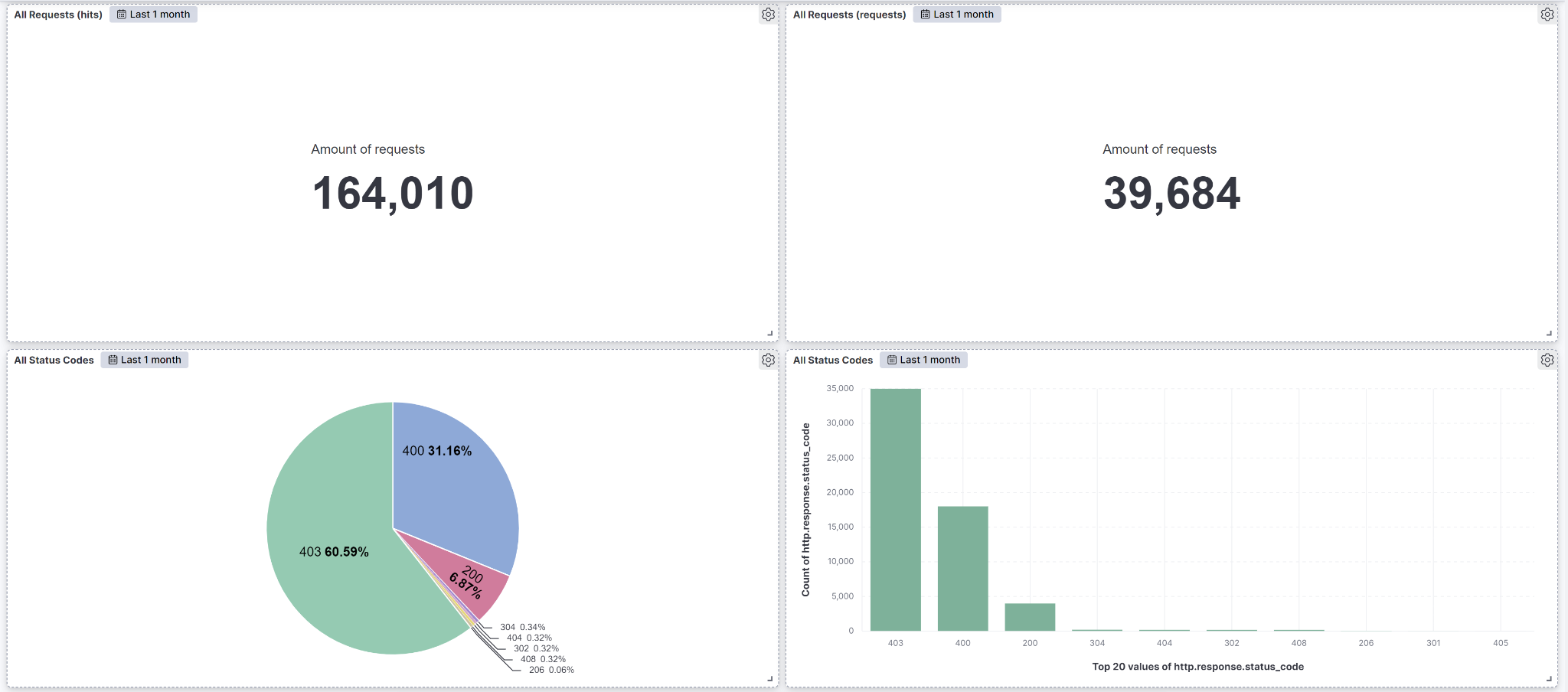
As part of a three-person team, I set up the logging and monitoring environment for our honeypot project. I built Kibana dashboards to explore web traffic and added ModSecurity to the web server.
Kibana request overview, December 2022. These are dashboard counts, not a verified total of attacks or blocked threats. Select the image to enlarge it on this page.
My contribution
ELK setup: installed and configured the ELK monitoring setup across the monitored VPS and the dedicated ELK VPS.
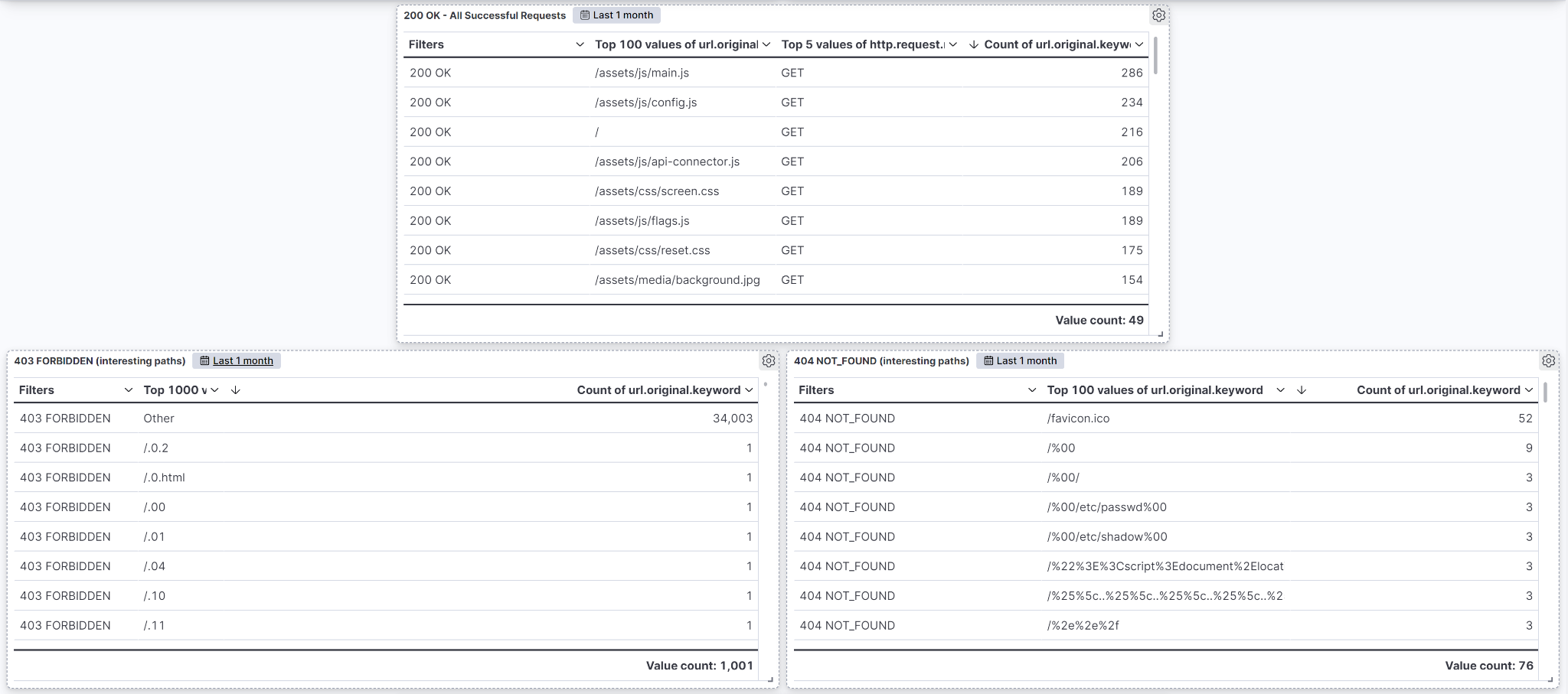
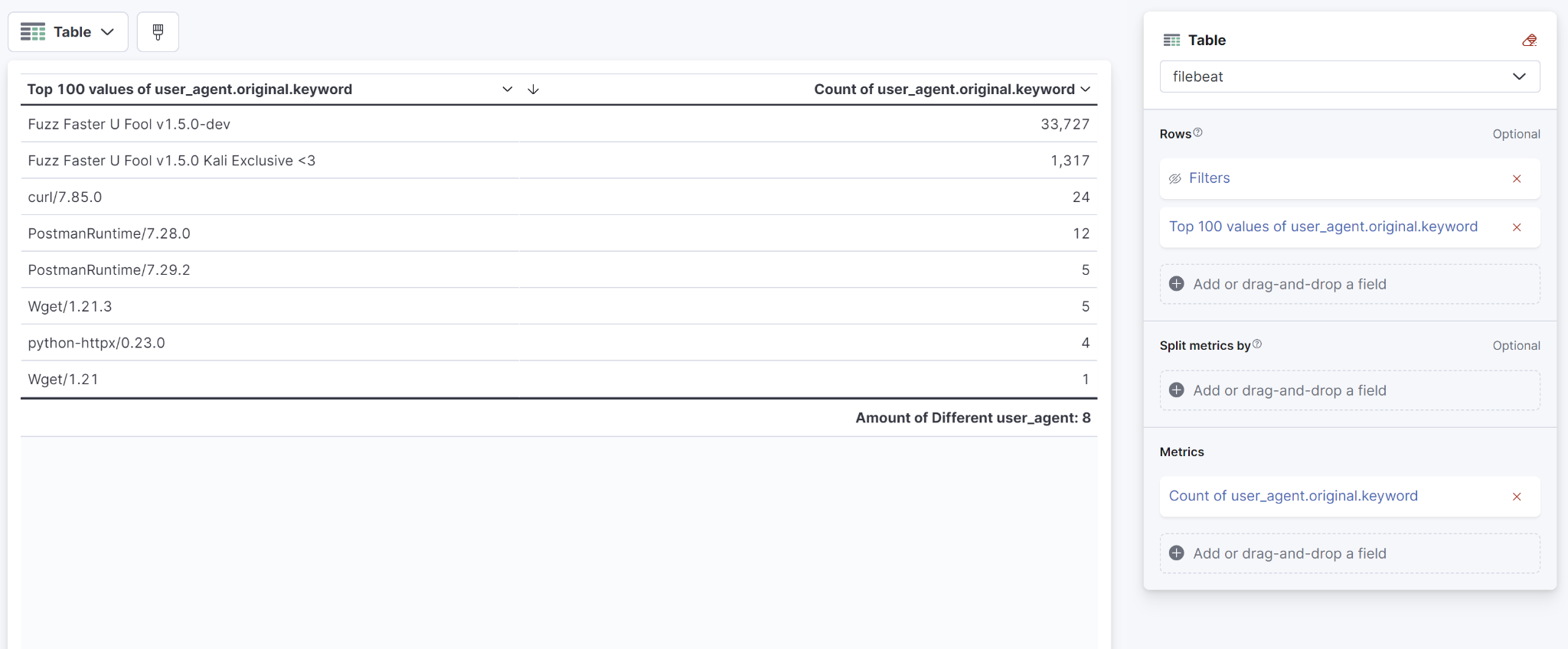
Kibana dashboards: created views for request activity, HTTP response codes, requested paths, and user-agent strings.
ModSecurity: added the web application firewall to the web server.
Ansible: handled the Ansible automation for setting up the project environment.
What the dashboards show
The saved views show HTTP responses, unusual requested paths, and user-agent strings associated with tools such as ffuf, curl, and Postman. They provide starting points for investigating traffic; a status code or user-agent string alone does not establish whether a request was malicious.
View more dashboard evidenceRequested paths grouped by response code, including unusual encoded paths and requests referencing system files.User-agent aggregation showing traffic labelled with several testing tools. These strings are supplied by clients and can be changed.